How Burn Cards Reshape Probability Flows in Multi-Deck Baccarat Sessions
Written by Sam Washington · Aug 24, 2026
How Burn Cards Reshape Probability Flows in Multi-Deck Baccarat Sessions
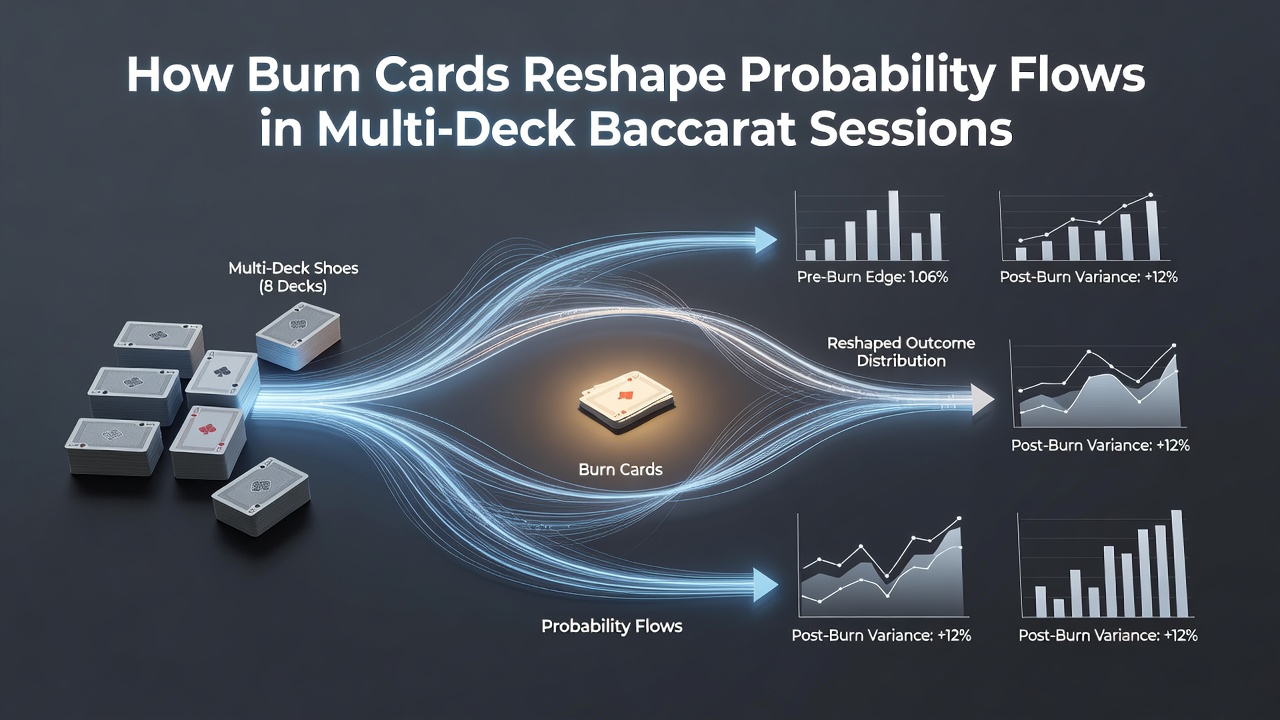
Multi-deck baccarat sessions rely on shoes containing six or eight standard decks, and burn cards represent the initial cards discarded from the top of the shoe before the first hand begins. Casinos typically burn between one and ten cards depending on house procedures, and this removal alters the exact composition of the remaining 312 or 416 cards in play. Observers note that such adjustments shift the baseline probabilities for player, banker, and tie outcomes because each removed card carries a fixed value that affects subsequent draws.
Mechanics of Burn Card Implementation
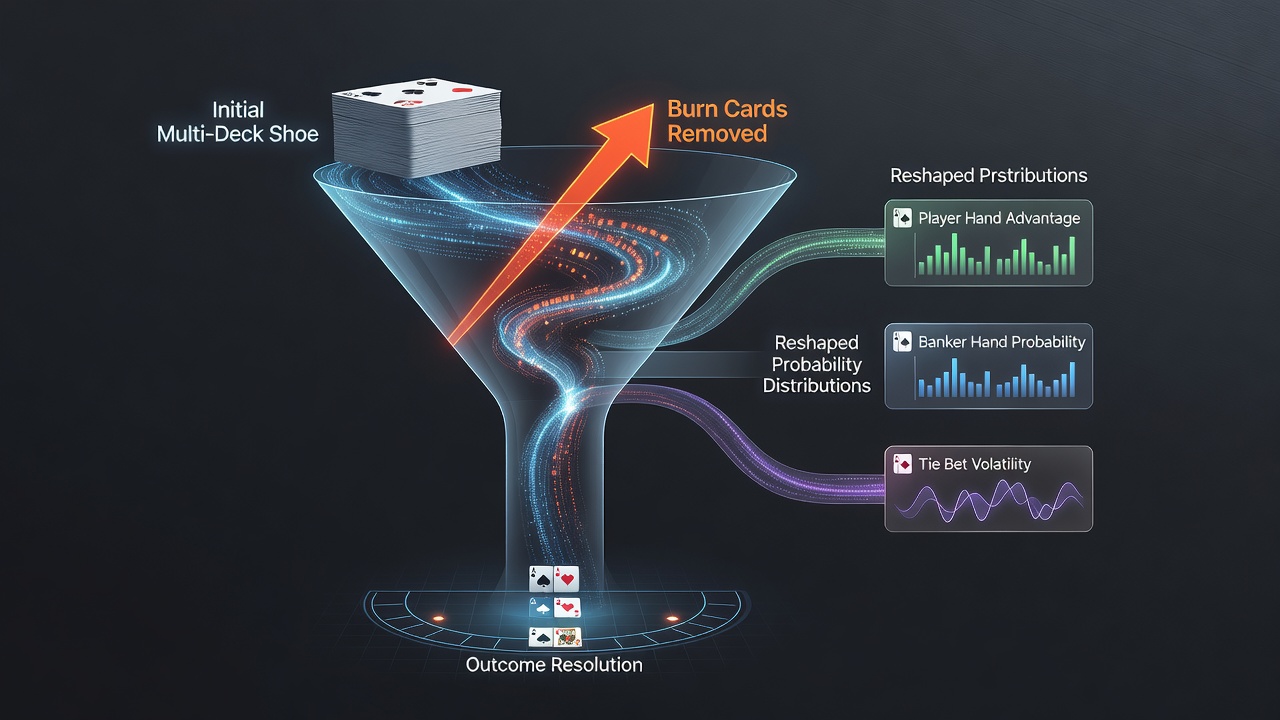
Dealers follow established protocols where a marker card appears near the end of the shoe, and the burn process occurs immediately after shuffling and cutting. The number of burned cards often corresponds to the value of the first card revealed, though some venues fix the count in advance. Those who track card flow record that removing high-value cards such as tens and aces reduces the frequency of natural wins, while burning low-value cards increases the relative proportion of face cards left in the shoe. Research indicates these changes modify the expected value of each betting option by fractions of a percent, yet the cumulative effect across hundreds of hands becomes measurable.
Impact on Probability Distributions
Probability calculations in baccarat depend on the precise count of each card rank remaining in the shoe. When burn cards eliminate specific ranks, the ratios that determine banker and player win rates deviate from the standard 45.86 percent banker win rate and 44.62 percent player win rate that apply in a full eight-deck shoe. Data shows that removal of several tens, for example, slightly elevates the chance of three-card draws, which in turn influences the conditional probabilities embedded in the banker draw rules. Experts have observed that tie bets, already carrying a high house edge, experience further variance because the likelihood of matching totals changes when the deck composition skews toward or away from particular point totals.
Card Removal Effects by Rank
- Elimination of aces and tens decreases natural hand frequency and raises the proportion of hands requiring a third card.
- Removal of low cards such as twos and threes increases the average point value of remaining cards and modifies draw thresholds.
- Balanced removal across ranks produces smaller shifts, whereas clustered removal of one rank amplifies measurable deviations.
Studies conducted on live shoe data reveal that the order of burned cards also matters because early removal affects the entire subsequent sequence of hands until the next shuffle. Analysts tracking sessions in August 2026 noted that several properties adjusted burn procedures following internal audits that quantified these probability drifts, and regulatory filings from the Nevada Gaming Control Board documented updated internal control standards addressing burn card transparency.
Tracking and Modeling Approaches
Professional observers employ combinatorial mathematics to recalculate odds after each burn sequence. Software models simulate millions of shoes with different burn patterns and produce updated house edge figures that casinos and researchers compare against baseline values. One study released by the University of Nevada, Reno in 2025 examined 50,000 eight-deck shoes and found that burning exactly five cards produced an average shift of 0.03 percent in banker edge, while burning ten cards widened the range to 0.07 percent depending on which ranks disappeared. Those who model these flows emphasize that the effect remains small per hand yet accumulates across extended play sessions.
Regulatory bodies in other jurisdictions have begun requiring disclosure of burn procedures to maintain game integrity. The Malta Gaming Authority published guidelines in early 2026 that mandate clear documentation of burn card counts and periodic verification of shuffle machines to ensure consistent application. Such measures address concerns that inconsistent burn practices could inadvertently alter expected returns without player knowledge.
Practical Session Implications
Players who monitor remaining deck composition sometimes adjust bet sizing when they detect pronounced shifts caused by heavy burn sequences, although most venues prohibit card counting devices and limit visible tracking. Data from casino floor reports shows that sessions with unusually high numbers of burned face cards correlate with slightly elevated third-card draw rates, which in turn affects the timing of banker and player decisions. Observers note that these micro-adjustments rarely overcome the built-in house edge, yet they illustrate how burn cards continuously reshape the probability landscape throughout a shoe.
Additional modeling from Canadian research institutions indicates that multi-deck games experience less volatility from burn cards than single-deck variants because the larger card pool dilutes the impact of any small removal set. Nevertheless, the cumulative effect across repeated shuffles still registers in detailed statistical reviews conducted by gaming laboratories.
Conclusion
Burn cards function as an integral component of multi-deck baccarat operations that systematically modifies the composition of each shoe and thereby recalibrates probability flows for every subsequent hand. Research demonstrates measurable though modest changes in outcome frequencies, and regulatory updates through 2026 continue to standardize disclosure and verification practices. Those who analyze live data recognize that consistent application of burn procedures maintains game fairness while introducing predictable variations that statistical models can quantify across extended sessions.